Monday, March 28, 2005

Lophophora from seed – II

A month after sowing the Lophophora seeds the germination rates are:

  • 17/30 - L. diffusa (RS 1193; Peña Miller, Queretaro)
  • 13/30 - L. williamsii (La Soledad, Coahuila)
  • 23/30 - L. williamsii (RS 428A; Cuatro Ciénegas, Coahuila)
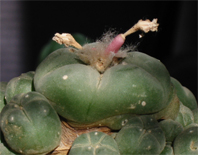
Not impressive rates compared with previous years. I’m using a new seed supplier and a new sowing method – both could be the culprit. Lophophora williamsii seedling Lophophora williamsii seedling a month after sowing Anyway, the seedlings are doing well. Most are growing their first areoles like the L. williamsii (RS 428A; Cuatro Ciénegas, Coahuila) seedling pictured above. < previous |

Sunday, March 20, 2005

Happy Vernal Equinox

Let’s all celebrate today’s vernal equinox (anyway, if you live in the Northern Hemisphere). Anything from a silent contemplation of the renewed growth of your cacti to a bacchanalian spring rite will do ;-)

It’s getting better all the time...

Monday, March 14, 2005

Obregonia and Ariocarpus from seed - III

Very few of my Ariocarpus fissuratus seed have germinated. Currently I have 3 thriving seedlings - and a corresponding number that dampened off. I'll keep the seedlings in a varm, humid environment for a while; hopefully more seed will germinate. I'm not sure if I'm treating the seed wrong, if the quality of the seed were inferior, or if A. fissuratus is just hard to grow from seed.

The germination rate of the Obregonia denegrii seed is close to a 100% (the seed were treated in exactly the same way as the A. fissuratus seed). The seedlings have been moved to a slightly cooler location, and soon I'll slowly introduce them to the harsh world outside the growing bag.

< previous | next >

Tuesday, March 08, 2005

Huntington Botanical Gardens

Saturday (March 05, 2005) I visited Huntington Botanical Gardens with high expectations. Initially I was a bit disappointed by the Desert Garden – the focus seems to be more on gardening than on botanical aspects, i.e. the plants were primarily grouped by appearance instead of by biotopes, many of the plants were unmarked etc. I should have been warned by the welcoming sign saying: The garden before you is hardly a desert ;-) Also a lot of the paths were closed with “do not enter” and “no admittance” signs! That being said, I ended up spending more than 3 hours studying the various species of cacti.

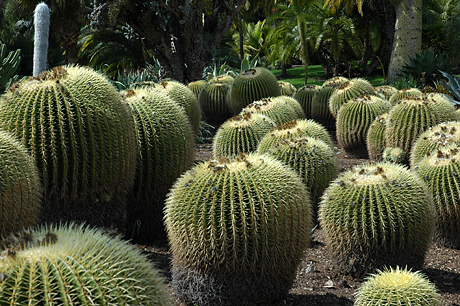
Echinocactus grusonii
An impressive group of Echinocactus grusonii

Unfortunately very few of the cacti were blooming – I would like to return in a month or two when the flowering is in full swing.

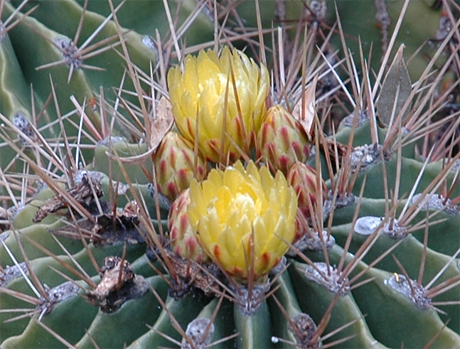
Ferocactus echidne var. victoriensis
Flowering Ferocactus echidne var. victoriensis

I took a lot of pictures. As time permits I’ll process and upload them to a photo gallery.

Saturday, February 26, 2005

Lophophora from seed

Tomorrow my work is taking me to the USA for 9 days, so I decided to sow my Lophophora seed a bit earlier than planned. 30 seeds of each of the species mentioned below were sowed.

  • L. diffusa (RS 1193; Peña Miller, Queretaro)
  • L. williamsii (La Soledad, Coahuila)
  • L. williamsii (RS 428A; Cuatro Ciénegas, Coahuila)
The seed were handled as described in “Growing cacti from seed”. Later in spring I'll sow another batch of Lophophora seed in a cold house. | next >

Friday, February 18, 2005

Return of the red bastards

I recently lost all of last years Lophophora fricii seedlings (and a lot of the L. diffusa and L. williamsii seedlings as well) because of too prudent a watering scheme – or so I presumed.

To my dismay the withering of the surviving seedlings continued, even after generous waterings. After a closer inspection of the seedlings, using a x10 magnifying lens, the reason became clear: a bunch of red spider mites were feasting on the plants.

The plants were promptly sprayed with insect soap and the treatment will be repeated in a week. It probably won’t kill off all of the spider mites, so the battle is now on. Last year I fought the spider mites using soap, predator mites, cinnamon and garlic brews, and by raising the humidity levels and increasing the air circulation – apparently some survived.

I wonder if I would have been able to save my L. fricii plants if the mites had been discovered sooner.

Sunday, February 13, 2005

Obregonia and Ariocarpus from seed - II

Two days ago, at the beginning of the weekend, there were not many signs that the Obregonia or Ariocarpus seed would germinate. Tonight more than half of the Obregonia and a few of the Ariocarpus seed had germinated.

The seedlings still have a pale, yellowish hue - hopefully they will take on a healthier chlorophyll-green in a couple of days.

< previous | next >

Tuesday, February 08, 2005

Strombocactus from seed - II

A week after sowing the seed the first couple of seedlings have appeared. Small green “blobs” the size of (extremely small) pinheads.

I expected the seedlings to be very small, but these seem infinitely fragile. Hopefully they will survive the first critical period.

< previous | next >

Saturday, February 05, 2005

Obregonia and Ariocarpus from seed

It’s probably too early in the year, but today seemed like a good day for sowing:


  • Obregonia denegrii (VVZ 163; San Vicente, Tamaulipas)
  • Ariocarpus fissuratus (PP 176; Big Bend, Texas)

The seed (30something of each species) were handled as described in “Growing cacti from seed”.

I’m holding my Lophophora seed back – I’m planning on sowing an indoor batch in early spring and a cold house batch in late spring.

| next >

Monday, January 31, 2005

Strombocactus from seed

Another first for me: Strombocactus from seed. 60something dustlike seed of Strombocactus disciformis ssp. esperanzae (RS 547; Xichu, Guanajuato).

I decided to sow in the same growing medium I'm using for my mature (limestone-loving) plants, i.e. equal parts of:


  • Coarse, loamy sand
  • Limestone gravel
  • Milled sphagnum moss peat

I'm usually not sterilizing my growing medium before sowing, but in this case (extremely small seed and slow growing seedlings) I filled a pot with the compost and let it soak for a couple of minutes, put the pot in a plastic bag (not closed tightly) and brought it to a controlled boil in the microwave.

When everything had cooled down I sowed the seed (using a moist toothpick). The seed were placed directly on the surface of the compost and not covered. The pot was then sprinkled slightly with water and placed in the plastic bag with a bit of water at the bottom. Finally the bag was sealed closely and placed in a heated windowsill.

Now I just have to wait...

| next >

All Time Most Popular Posts